
No products in the cart.

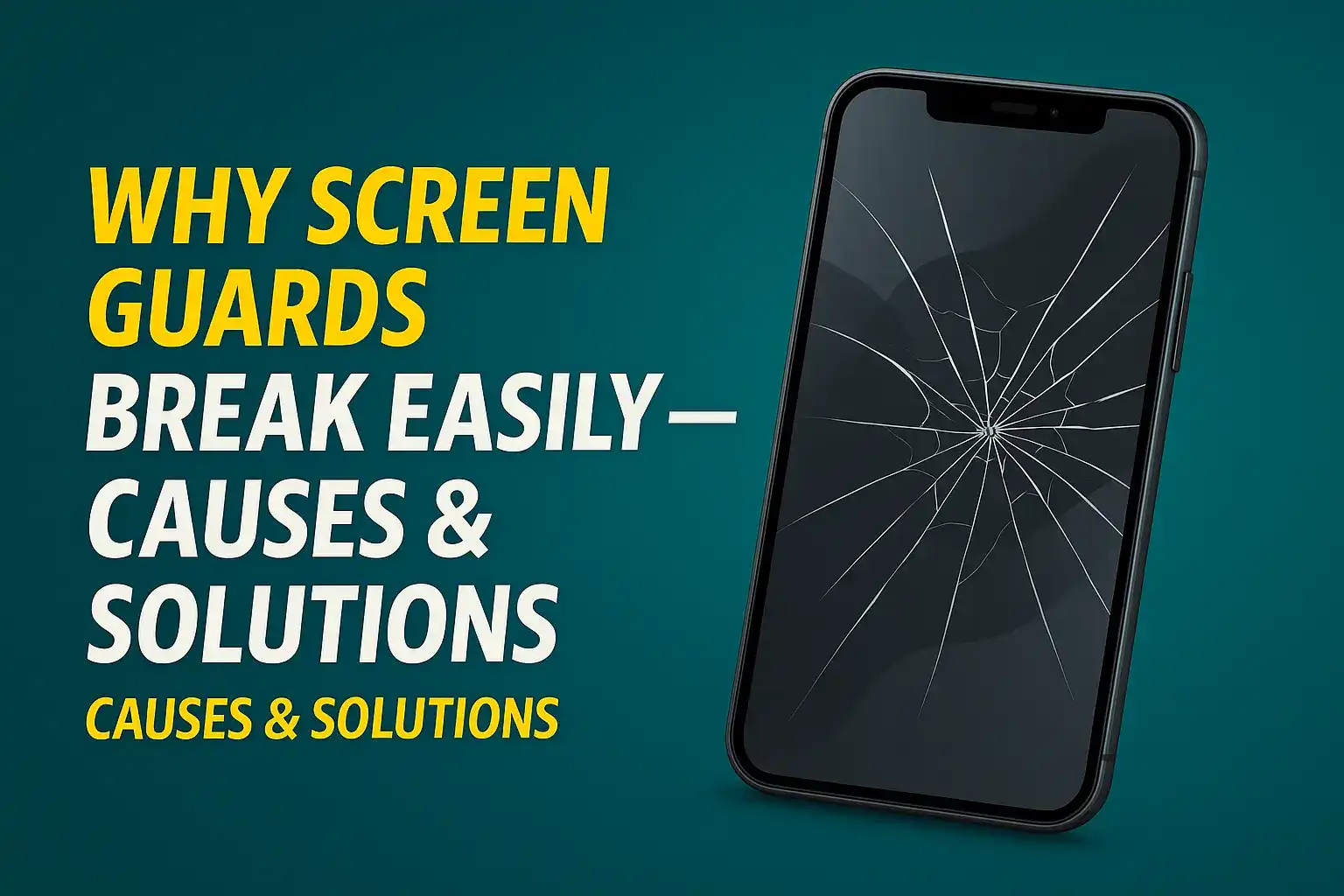
Why Screen Guards Break Easily – Causes & Solutions
By Zenkor •
Introduction
Screen guards (tempered glass, UV glass, hydrogel or PET film) protect your phone’s display — but sometimes they break or crack much sooner than expected. Understanding why they break helps you avoid repeat problems and choose the right protector. This guide explains common causes, quick fixes and long-term solutions in simple language.
Short summary — quick answers
- Most common cause: Impact on a weak point (edge/corner) or micro-cracks from previous stress.
- Other causes: Poor quality protector, bad installation, incompatible phone case, temperature stress, and manufacturing defects.
- Best solutions: Proper installation, correct protector type (UV glass for curves), use a compatible case, and avoid shocks to the edges.
1. Common Causes — Detailed
1.1 Impact on edges and corners
Most breaks start at the edge or corner where the protector is weakest. A small knock on the side concentrates force and causes a crack that spreads across the guard.
1.2 Micro-cracks from previous drops
A small, unnoticed strike creates invisible micro-fractures. Later, a minor hit or pressure turns that micro-crack into a full break.
1.3 Poor-quality glass or film
Low-quality protectors use weaker materials or poor tempering; they have lower hardness and less impact resistance, so they break easily.
1.4 Wrong protector type for the phone
Using a flat protector on a curved screen, or a non full-adhesive glass on a curved edge, causes poor adhesion and edge lifting — which makes the protector vulnerable to cracking.
1.5 Bad installation (dust, misalignment, pressure)
Bubbles, trapped dust, or uneven pressure during installation create stress points that may lead to cracking later.
1.6 Case incompatibility
Tight or poorly designed phone cases press the protector edge and cause continued pressure. Repeated pressure can slowly crack the guard.
1.7 Thermal stress and temperature changes
Sudden temperature changes (hot sun → cold air, or heating from heavy use) cause expansion and contraction. If the protector and screen expand differently, stress may cause cracks.
1.8 Manufacturing defects or old stock
Occasionally a protector has a factory weakness or was stored poorly (bent boxes, long storage in heat) — these are more likely to fail.
2. How to Diagnose the Cause Quickly
- Edge/corner cracks: Usually impact or case pressure.
- Center star-shape crack: Direct hit or drop on face.
- Slow spreading hairline cracks: Pre-existing micro-damage or pressure from a case.
- Yellowing or cloudy break: Material degradation (replace protector).
3. Immediate Actions When a Guard Breaks
- If glass shards are loose, remove the protector carefully using tape to lift it as a single piece (avoid touching shards).
- If the protector is intact but cracked, do not press on it — remove it to avoid further damage to the phone screen.
- Clean the screen with a soft cloth and check for underlying screen damage before applying a new protector.
- If your phone screen itself is damaged, stop using the device and consult a technician for repair.
Safety tip: Use gloves or cloth when removing broken tempered glass to avoid injury. Use strong tape to lift sharp edges.
4. Long-Term Solutions — How to Prevent Breaks
4.1 Use the right protector for your phone
For curved displays, prefer curved-compatible full-adhesive/UV tempered glass or a high-quality hydrogel film. For flat screens, choose full-adhesive tempered glass with correct cutouts.
4.2 Proper installation — dust-free and level
- Install in a clean, low-dust area (bathroom after hot shower is a common trick).
- Use the supplied alcohol wipe, microfiber cloth and dust stickers.
- Align carefully and press from center outward; remove bubbles before final adhesion.
4.3 Use a case designed for screen protectors
Choose a case that does not press on the protector edges. Slim, case-friendly models or cases specified as protector-compatible work best.
4.4 Avoid impacts to edges — change handling habits
The simplest prevention is avoiding edge-first drops. Use pocket placement that keeps the screen safe, and avoid placing the phone face-down on rough surfaces.
4.5 Replace protectors showing micro-cracks
If a protector shows small hairline cracks or chips, replace it immediately — they often grow quickly with normal use.
4.6 Keep temperature changes gradual
Avoid sudden shots of heat or cold to the phone (like leaving it on a hot car dashboard), especially right after heavy use or charging.
4.7 Buy well-made protectors and check packaging date
Prefer protectors that list material hardness (9H for glass), full-adhesive on curved models, and come with proper installation tools. Avoid old or visibly damaged retail boxes.
5. Material-Specific Notes
Tempered glass
Very good scratch and impact resistance, but brittle at thin edges. Protect edges and choose full-adhesive for curves.
UV tempered glass for curved phones
Provides full edge bonding. Correct installation is essential — excess glue or tilt during install increases risk of edge failure.
Hydrogel / PET films
Flexible and edge-friendly but lower impact resistance. Good for scratch protection and curves; replace more often if used roughly.
6. FAQs
Q: My tempered glass broke without any noticeable drop — why?
A: Likely a micro-crack from an earlier unnoticed impact, pressure from a case, thermal stress, or a factory defect. Replace and monitor carefully.
Q: Can I prevent cracks completely?
A: No protector is unbreakable — but correct protector choice, careful installation and sensible handling reduce the risk dramatically.
Q: Should I remove a cracked protector immediately?
A: Yes. A cracked protector can have sharp edges and may hide or worsen underlying screen damage. Remove it safely and inspect the screen.
Q: Does a thicker protector mean less chance of breaking?
A: Thicker protectors can absorb more impact but thickness alone is not enough. Material quality, adhesive, edge strength and installation matter more.
7. Checklist Before Buying a New Protector
- Is it model-specific (correct cut and curve)?
- Does it mention full-adhesive or UV (for curved screens)?
- Material hardness (9H for glass) and HD clarity?
- Does the pack include installation tools (wipes, dust stickers, guide)?
- Is the protector fresh stock (no visible box damage)?
Conclusion
Screen guards break easily for many reasons — edge impacts, micro-cracks, poor quality, bad installation, case pressure and temperature stress. You cannot make them completely unbreakable, but you can reduce the chance of cracking significantly by choosing the right protector, installing it correctly, using a compatible case and avoiding impacts to edges. Regular inspection and early replacement of damaged protectors keep your phone screen safe for longer.


Add comment