
No products in the cart.

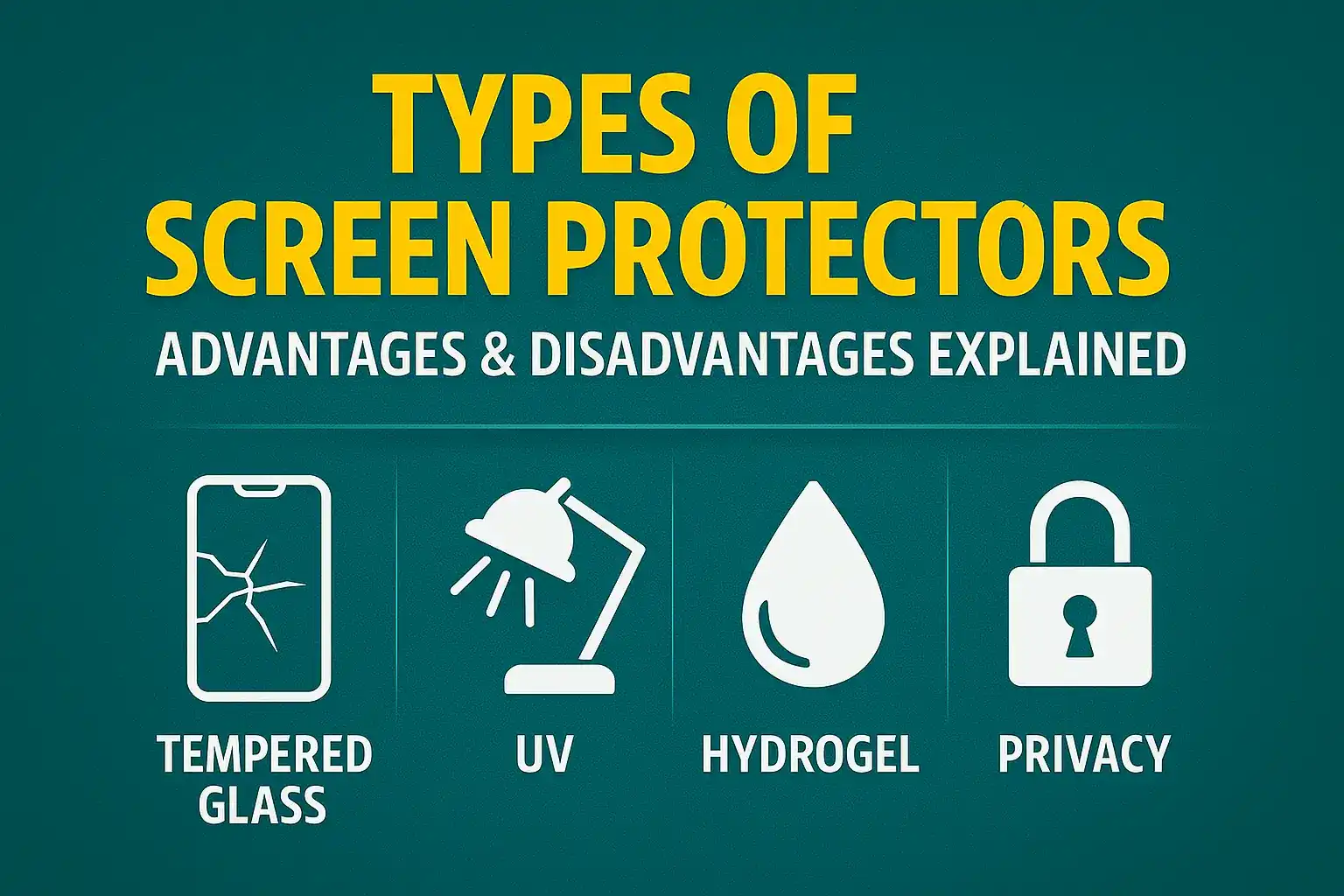
Types of Screen Protectors – Advantages & Disadvantages Explained
By Zenkor •
Introduction
Screen protectors are essential for keeping your smartphone display safe from scratches, drops and daily wear. But with so many different types available—tempered glass, UV glass, hydrogel film, privacy protector and PET film—it can be confusing to understand which one is best for you.
This guide explains every important screen protector type along with their advantages and disadvantages so you can choose confidently.
1. Tempered Glass Screen Protector
Tempered glass is the most commonly used screen protector, offering strong everyday protection.
Advantages
- High scratch resistance (9H hardness level).
- Good drop protection due to shock absorption.
- Smooth touch experience and clear visibility.
- Oleophobic coating reduces fingerprints.
- Easy to install and affordable.
Disadvantages
- May not stick properly on curved displays.
- Edges can lift if quality is low.
- Slightly thicker than other types.
2. UV Tempered Glass (Full Adhesive Glass)
UV tempered glass uses liquid glue and a UV curing light that makes it bond completely to the screen—especially useful for curved displays.
Advantages
- Best fit for curved screens—no edge lifting.
- Excellent clarity and smooth touch response.
- Strong protection against cracks and drops.
- Full adhesive layer from edge to edge.
Disadvantages
- Installation takes more time.
- Requires careful application to avoid glue entering the speaker.
- Need UV light for curing.
3. Hydrogel Film (Soft Film Protector)
Hydrogel protectors are soft, flexible films that can cover curved edges more easily than standard tempered glass.
Advantages
- Very flexible—perfect for curved screens.
- Self-healing ability for minor scratches.
- Thin and nearly invisible.
- Good touch sensitivity.
Disadvantages
- Low protection from drops and strong impacts.
- Scratches more easily than glass.
- Not as durable as tempered glass.
4. Privacy Screen Protector
A privacy screen protector restricts viewing angles so people around you cannot see your display clearly.
Advantages
- Protects privacy in public places.
- Decent scratch protection.
- Ideal for office workers, students, and travellers.
Disadvantages
- Reduces brightness slightly.
- In-display fingerprint may become less responsive.
- Not suitable for gamers due to dimming.
5. PET Film (Plastic Film Protector)
PET film is a basic plastic protector that offers minimal scratch protection at a very low cost.
Advantages
- Very budget-friendly.
- Light and thin.
- Better than no protection.
Disadvantages
- Very low impact protection.
- Not durable—scratches easily.
- No premium feel like glass.
Comparison Table
| Protector Type | Best For | Protection Level | Clarity | Ease of Installation |
|---|---|---|---|---|
| Tempered Glass | Flat screens, general use | ⭐⭐⭐⭐ | ⭐⭐⭐⭐⭐ | ⭐⭐⭐⭐ |
| UV Tempered Glass | Curved screens, premium protection | ⭐⭐⭐⭐⭐ | ⭐⭐⭐⭐⭐ | ⭐⭐⭐ |
| Hydrogel Film | Curved edges, self-healing | ⭐⭐⭐ | ⭐⭐⭐⭐ | ⭐⭐⭐⭐⭐ |
| Privacy Protector | Privacy-conscious users | ⭐⭐⭐ | ⭐⭐⭐ | ⭐⭐⭐⭐ |
| PET Film | Very basic scratch protection | ⭐⭐ | ⭐⭐⭐ | ⭐⭐⭐⭐⭐ |
Which Screen Protector Should You Choose?
- Flat screen phones: Tempered glass works best.
- Curved display phones: UV tempered glass or hydrogel film.
- Privacy needed: Privacy screen protector.
- Budget option: PET film (basic only).
Conclusion
Every type of screen protector has its own strengths and weaknesses. If you want the best overall protection, tempered glass or UV tempered glass is your best choice. For curved edges, hydrogel films offer a flexible and smooth alternative. For privacy, choose a privacy screen protector. PET film is suitable only for temporary or basic needs.
Final advice: Choose based on your phone type, usage style, and protection needs for the best results.
Add comment