
No products in the cart.

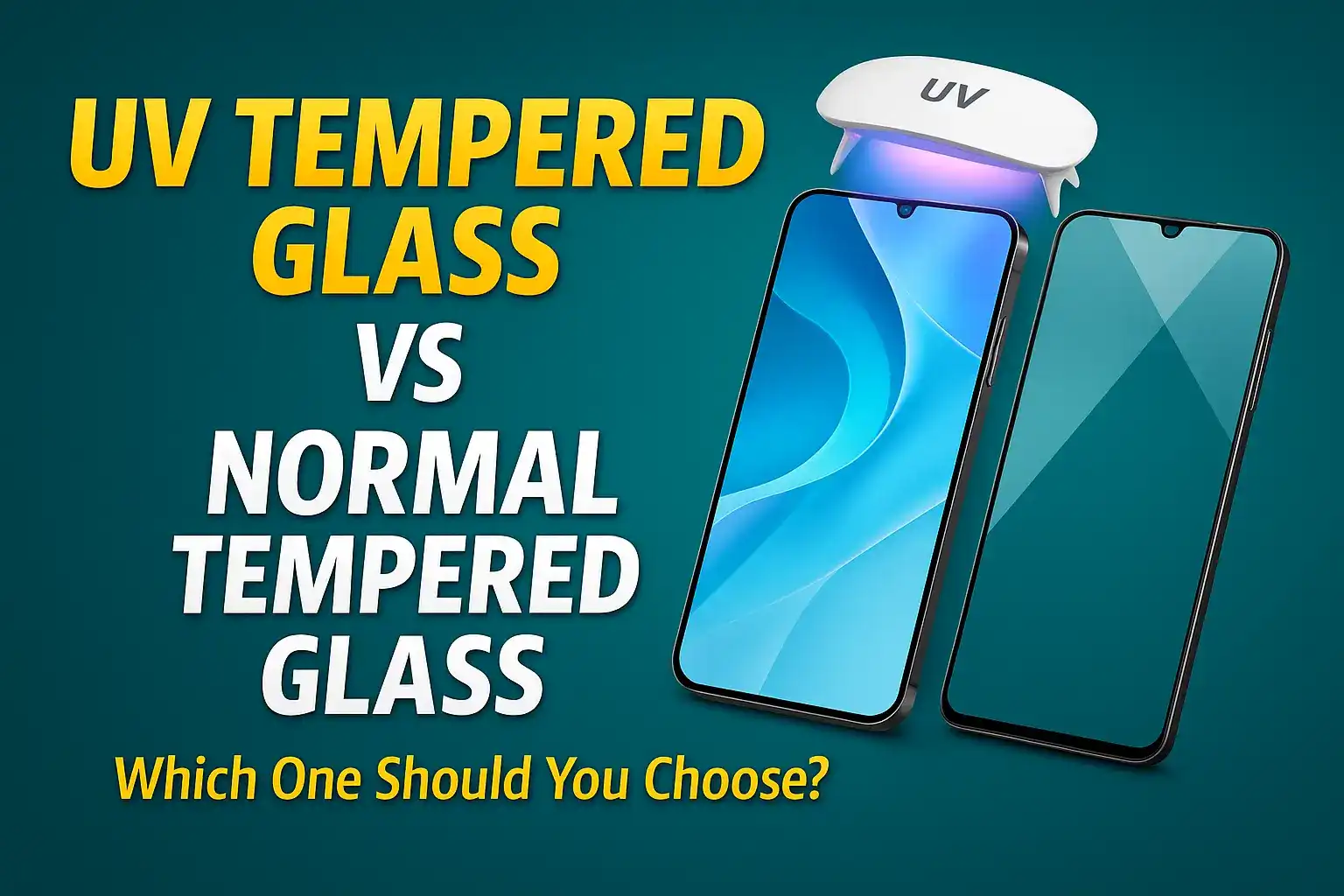
UV Tempered Glass vs Normal Tempered Glass – Which One Should You Buy?
By Zenkor •
Introduction
Screen protectors help protect your smartphone display from scratches, minor drops and daily wear. The two popular options today are UV tempered glass and normal tempered glass. Both offer protection, but they differ in how they behave — especially on curved screens.
This guide explains the real differences, advantages, disadvantages, and which one is best for your phone.
What Is Normal Tempered Glass?
Normal tempered glass is a hardened glass protector with increased strength and scratch resistance compared to plastic films. It is commonly used on flat screens and many mid-range devices.
Advantages of Normal Tempered Glass
- Good scratch resistance (usually 9H rating).
- Clear visibility and smooth touch performance.
- Easy and quick to install.
- Affordable and widely available.
Disadvantages of Normal Tempered Glass
- Edges may not stick properly on curved displays.
- Edge lifting and bubbling are common on edge/corner areas.
- Does not cover full screen on curved phones (gap near edges).
What Is UV Tempered Glass?
UV tempered glass uses a liquid UV adhesive that spreads evenly across the entire display surface — including curves. A UV lamp is used to cure (harden) the glue, creating a full edge-to-edge bond with the phone screen.
Advantages of UV Tempered Glass
- Full edge-to-edge adhesion — no gaps around curves.
- Better drop protection due to complete bonding.
- Less chance of edge lifting or bubbling.
- Excellent clarity and almost original touch experience.
Disadvantages of UV Tempered Glass
- Installation is more involved and takes longer.
- Requires careful handling of liquid UV glue.
- Needs a UV curing light.
- Extra steps can be intimidating for beginners.
Head-to-Head Comparison
| Feature | Normal Tempered Glass | UV Tempered Glass |
|---|---|---|
| Protection Level | Good | Excellent |
| Edge Coverage | Limited on curved screens | Full edge coverage |
| Installation Ease | Very easy | Moderate (needs UV curing) |
| Drop Protection | Good for flat screens | Better on curved screens |
| Price | Lower | Higher |
| Fingerprint Sensor Compatibility | Usually works fine | Works fine |
| Clarity & Touch Feel | Excellent | Excellent |
Important: Protection quality depends on glass material and fit more than just the tempered type — not all tempered glasses are equal.
When Should You Buy Normal Tempered Glass?
- If you have a flat-screen phone.
- If you want a fast and easy installation.
- If you want a budget-friendly protector.
- If you prefer simple daily scratch and minor impact protection.
When Should You Buy UV Tempered Glass?
- If you have a curved display (edge-to-edge screen).
- If you want full coverage protection without gaps around edges.
- If you want better drop resistance for daily rough use.
- If you don’t mind a slightly longer installation process.
Installation Tips for Both Types
Normal Tempered Glass
- Clean screen with the supplied wet wipe and microfiber.
- Use dust sticker to remove tiny particles.
- Align carefully and press from center outward.
- Check for bubbles and push them out gently with a card.
UV Tempered Glass
- Clean and dust the screen thoroughly.
- Use guide stickers to place the protector accurately.
- Apply UV glue evenly in center or pre-designed areas.
- Place the protector slowly from top to bottom.
- Use the UV lamp to cure the glue completely.
- Repeat curing in sections for best adhesion.
Common Myths vs Reality
- Myth: Normal tempered glass is always weaker.
Reality: On flat screens, a good quality normal tempered glass can be very strong. - Myth: UV glass is only for expensive phones.
Reality: UV glass helps curved edges — price depends on quality, not brand. - Myth: UV glue can damage the screen.
Reality: Once cured, UV glue becomes solid and stable with no damage to the display.
Conclusion
Both normal tempered glass and UV tempered glass have their place. If you have a simple flat display and want quick protection, normal tempered glass works great. But if you have a curved screen offering edge-to-edge visuals, and you want full coverage with stronger bonding, then UV tempered glass is the smarter choice.
Final takeaway: Flat screen → normal tempered glass; curved screen → UV tempered glass. Always choose a protector that fits well and installs cleanly for best protection.


Add comment