
No products in the cart.

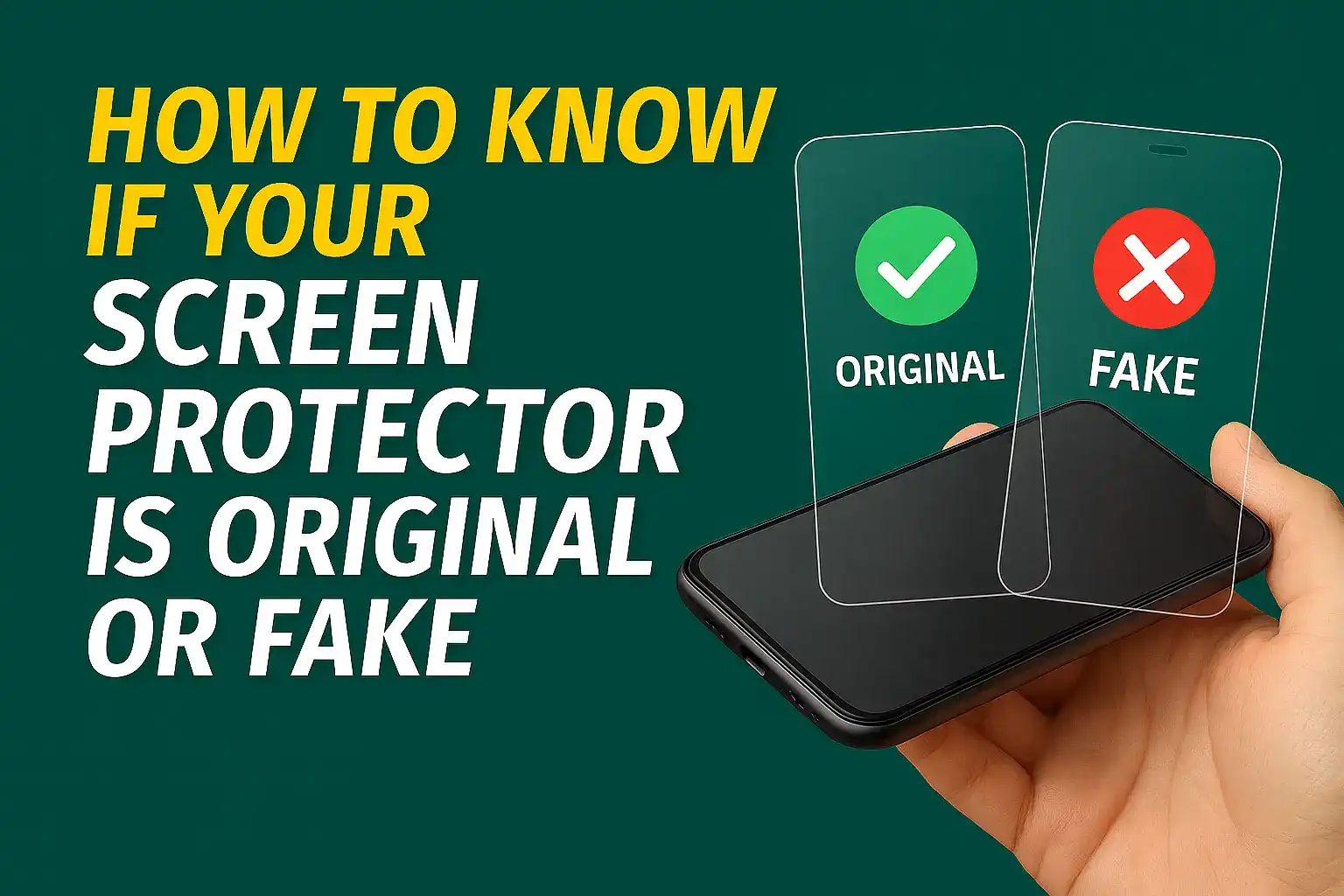
How to Know If Your Screen Protector Is Original or Fake
By Zenkor •
Introduction
The market is full of both high-quality and low-quality tempered glasses. Fake or low-grade screen protectors look similar to original ones, but their protection and durability are much lower. Using a fake tempered glass can lead to:
- Poor touch response
- Weak protection against drops
- Bubbles and lifting issues
- Reduced display clarity
- Slow fingerprint sensor
This guide explains how to quickly identify whether your screen protector is original or fake.
1. Check the Thickness and Weight
Original tempered glass usually has a balanced thickness (0.25–0.33 mm). Fake protectors often feel:
- too thin
- too light
- or uneven in thickness
Thin fake glass breaks easily and provides almost no protection.
2. Look at the Edges
High-quality glass has perfectly smooth, polished 2.5D/3D curved edges. Fake protectors show:
- rough or sharp edges
- uneven curve
- visible micro-cracks
3. Test the Clarity
Original tempered glass maintains high display clarity. Fake glass looks:
- foggy or dull
- slightly yellowish
- grainy under bright light
Tip: Compare your display brightness before and after applying the glass.
4. Check the Oleophobic Coating
Original tempered glass has a strong oleophobic layer that resists fingerprints and gives a smooth glide. Fake glass:
- gets oily instantly
- feels sticky
- shows fingerprints that don’t wipe off easily
5. Adhesive Quality (Full Glue vs Edge Glue)
Original screen protectors use high-quality adhesive that sticks evenly across the display. Fake ones often have:
- weak glue
- bubbles forming within hours
- edge lifting after a few days
For curved phones:
Fake edge-glue glasses are common and usually cause poor touch response. Original UV glasses give full bonding and better results.
6. Touch Sensitivity Test
High-quality protectors maintain smooth and fast touch response. Fake ones cause:
- touch delay
- dragging effect
- typing mistakes
- poor gaming experience
7. Fingerprint Sensor Performance
If your phone has an in-display fingerprint sensor:
- original full-adhesive or UV glass works smoothly
Fake glasses (especially cheap privacy glass) often cause:
- slow fingerprint unlock
- failed attempts
- needing to press harder
8. Examine the Packaging
Genuine protectors come in properly sealed packaging with:
- clear printing
- correct alignment
- QR codes or product batch information
Fake packaging usually has:
- low-quality printing
- spelling mistakes
- generic, no-brand design
9. Look for Bubbles After Installation
Original tempered glass sits cleanly with minimal bubbles. Fake glass often shows:
- central bubbles
- constant corner lifting
- white spots inside
10. Price That Looks Too Good to Be True
Extremely cheap “premium” glasses are usually fake or low-grade. Genuine protectors have reasonable pricing because:
- material quality is higher
- coating layers are real
- adhesive is better
Bonus Tip: Scratch Test
Original tempered glass (9H) is scratch-resistant. Fake glass may scratch even with:
- keys
- coins
- nails
Warning: Do not test using sharp objects on your phone. Test only on the protector before installation.
Conclusion
Identifying original vs fake screen protectors is easy when you know what to check. Look for quality indicators like thickness, edge finishing, clarity, coating, packaging and adhesive strength.
Using an original tempered glass ensures:
- better protection
- smooth touch experience
- higher fingerprint accuracy
- longer durability
Final advice: Always check the glass quality carefully before buying — your phone’s safety depends on it.

Add comment