
No products in the cart.

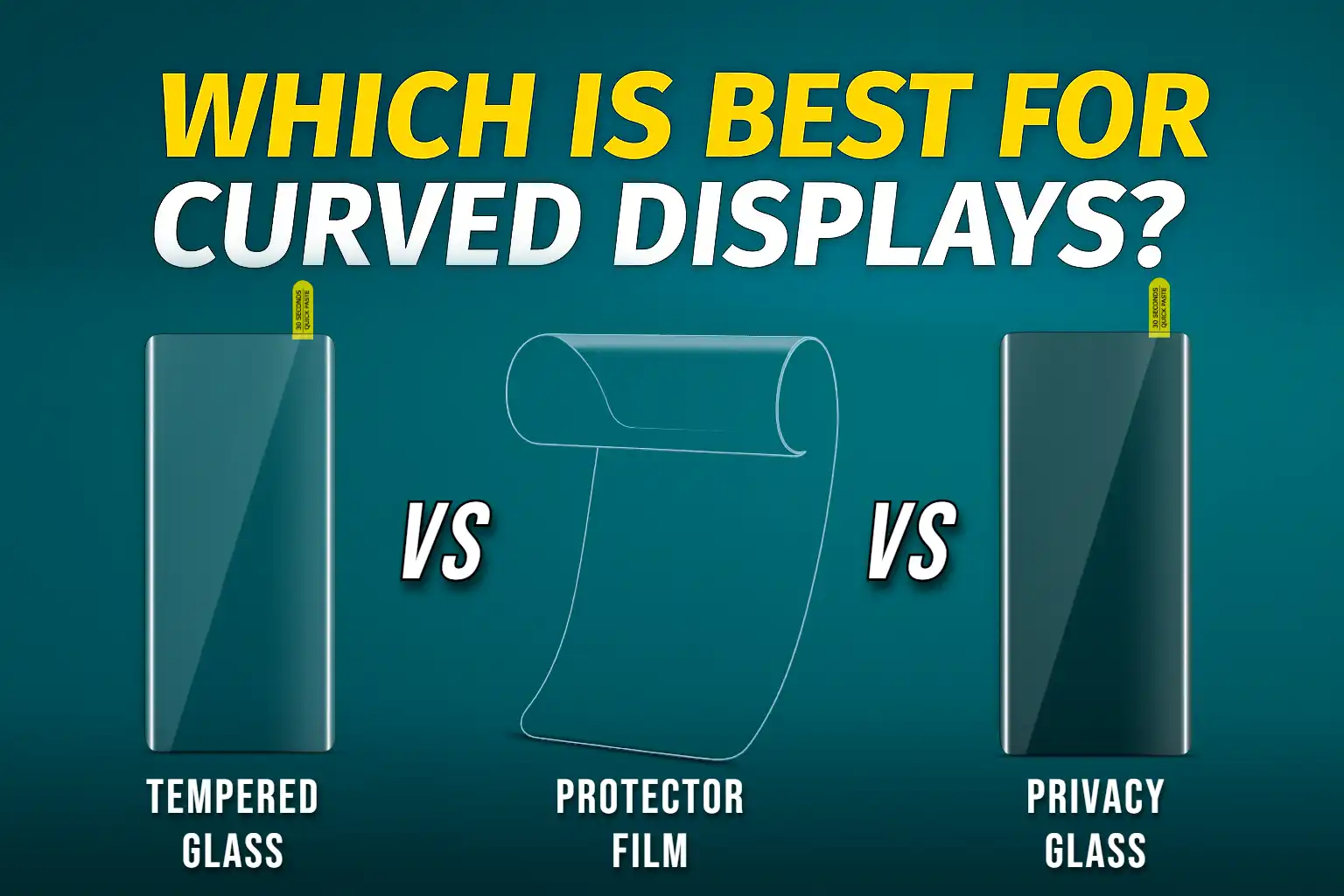
Which Is Best for Curved Displays? (Tempered Glass vs Protector Film vs Privacy Glass)
By Zenkor
Introduction
Curved display smartphones look stylish, premium and modern. The curved edges create an immersive visual experience and give the phone a flagship feel. But there is one big problem — curved screens are very delicate and quite difficult to protect properly.
Normal protectors do not fit properly on the edges. They start lifting, dust enters from the sides, or bubbles appear after a few days. This frustrates most users who want both style and safety.
So the main question is:
"Which screen protector gives real protection for curved displays?"
In this detailed guide, we will compare three popular options:
- UV Tempered Glass
- Hydrogel / Protector Film
- Privacy Tempered Glass
After reading this, you will clearly know which one is perfect for your curved phone.
1. UV Tempered Glass (The Best Option for Curved Displays)
UV tempered glass is specially designed for curved screens. It uses liquid UV glue that spreads across the entire display and sticks tightly once you cure it with a UV light.
This gives the strongest and most long-lasting adhesion compared to other options.
Why UV Tempered Glass Works Best
1. Full Edge Adhesion
Unlike normal edge-glue glass, UV tempered glass bonds to:
- The flat center area
- The curved edges
- The corners
- The full bezel area
This prevents the biggest problem on curved screens — edge lifting. When edges do not lift, dust and dirt cannot enter from the side.
2. Maximum Drop Protection
Because UV glass creates a strong layer between your display and outside impact, it helps to reduce:
- Vertical cracks
- Spider-web type cracks
- Touch damage issues
- Invisible hairline fractures
3. Long Lifespan
UV tempered glass can easily last for 6–12 months, sometimes even more, because:
- It does not peel off from the sides
- The glue does not weaken quickly
- It can handle daily usage and small impacts
4. Premium Touch and Clarity
Good quality UV glass maintains:
- Natural screen clarity
- Smooth touch response
- Good gesture control
- Almost original display feel
Downsides of UV Tempered Glass
- Installation requires UV glue and a UV curing lamp
- You must follow the steps properly to avoid glue overflow
- It may take a little more time to install compared to normal glass
Verdict: If you want real protection for a curved screen, UV tempered glass is the No.1 recommended option.
2. Hydrogel / Protector Film (Flexible but Not Very Strong)
Hydrogel or soft protector film is a flexible material that can bend easily and match the shape of curved displays. It is popular as a light protection option.
Advantages of Hydrogel Film
1. Perfect Fit on Curves
Because the film is soft, it can easily follow the curve of the screen. Once applied properly, it fits nicely and usually does not lift from the edges.
2. Scratch Protection
Hydrogel film can protect your screen from:
- Minor scratches from coins or keys
- Marks from pocket dust
- Daily finger swipes and rubbing
3. Bubble-Free and Easy Installation
The material often has a self-healing character. Small marks and minor bubbles sometimes reduce on their own after a day or two.
4. Affordable Option
Hydrogel film is normally cheaper than UV tempered glass, so it is useful for budget-conscious users.
Disadvantages of Hydrogel Film
1. Very Low Drop Protection
Hydrogel is basically a thin protective layer. It cannot absorb strong shocks. If the phone falls badly, the display is still at risk.
2. Scratches Over Time
Hydrogel itself can scratch and become dull after some weeks or months, especially if you use the phone roughly.
3. Less Premium Feel
The feel of hydrogel is not as glassy or premium as tempered glass. Some users may not like the soft touch response.
Verdict: Good for light users who mainly want scratch resistance, but not recommended if you want serious drop protection.
3. Privacy Tempered Glass (Curved-Friendly with Extra Privacy)
Privacy tempered glass has a special filter that blocks side viewing angles. This means people sitting next to you cannot easily see what is on your screen.
Advantages of Privacy Glass
1. Protects Your Privacy
Privacy glass is very useful in:
- Offices and workplaces
- Public transport
- Classrooms and coaching centers
- Cafes or crowded areas
2. Available in Curved Versions
Many brands make curved-display-friendly privacy glass with full glue or UV-type attachments, which helps them sit better on curved screens compared to normal flat protectors.
3. Balanced Protection
Privacy glass also provides decent drop and scratch protection, similar to normal tempered glass of good quality.
Disadvantages of Privacy Glass
1. Reduced Brightness and Clarity
Because of the privacy filter, the display may look slightly dimmer and less sharp than with a clear glass.
2. Fingerprint Sensor Issues
On phones with in-display fingerprint sensor, privacy glass can:
- Slow down fingerprint unlock
- Fail sometimes
- Require more pressure to recognize the finger
3. Higher Price
Privacy glass generally costs more than a normal clear tempered glass or hydrogel film.
Verdict: Best for people who really need privacy. Not the top choice if you want maximum brightness, clarity or perfect fingerprint performance.
Side-by-Side Comparison
| Feature | UV Tempered Glass | Hydrogel Film | Privacy Glass |
|---|---|---|---|
| Fit on Curved Edges | ★★★★★ | ★★★★★ | ★★★★☆ |
| Drop Protection | ★★★★★ | ★★☆☆☆ | ★★★★☆ |
| Scratch Resistance | ★★★★☆ | ★★★☆☆ | ★★★★☆ |
| Clarity | ★★★★★ | ★★★☆☆ | ★★★☆☆ |
| Fingerprint Sensor Support | ★★★★☆ | ★★★★☆ | ★★☆☆☆ |
| Privacy | ★★☆☆☆ | ★☆☆☆☆ | ★★★★★ |
| Lifespan | Long | Medium | Long |
Which One Should You Choose?
If you own a curved-screen smartphone, your main goals are usually protection, clarity and proper fit. Based on that:
- Best overall protection: UV Tempered Glass
- Budget scratch protection: Hydrogel / Protector Film
- Privacy + protection: Privacy Tempered Glass
Final Conclusion
Curved displays need a protector that sits properly on the edges. Flat-type protectors are not suitable for curved screens because they lift, create bubbles and collect dust from the sides.
For most users, UV Tempered Glass is the best and safest choice for curved phones — it gives strong protection, excellent clarity and a secure curved fit.
Hydrogel film is a good option if you mainly want scratch protection and are okay with lower drop safety. Privacy glass is ideal for those who want to hide their screen content from others but are ready to compromise a little on brightness and fingerprint performance.
Choose according to your usage, and your curved display will stay safe and stylish for a long time.
Add comment