
No products in the cart.

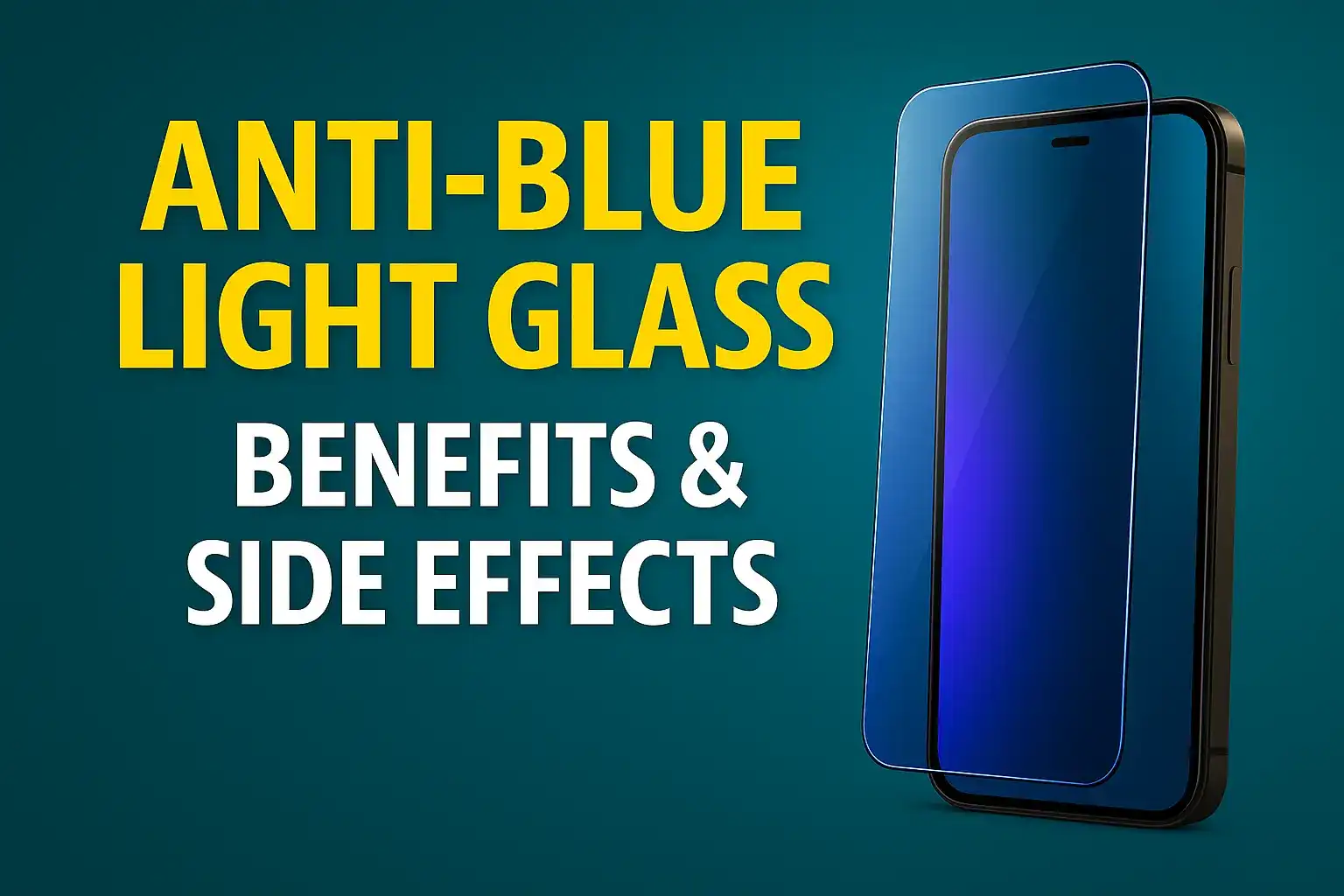
Anti-Blue Light Glass – Benefits & Side Effects
By Zenkor • 2025
Introduction
Smartphone users spend many hours on screens every day — working, gaming, watching videos or scrolling social media. This long usage exposes the eyes to high levels of blue light, which can cause strain, headaches and sleep problems.
To reduce this, many people use Anti-Blue Light Tempered Glass. But is it really useful? Does it have any side effects? Let’s understand everything in detail.
What Is Anti-Blue Light Tempered Glass?
Anti-blue light glass is a tempered screen protector with a special coating designed to filter harmful blue light (usually 380–450 nm wavelength).
It does not completely block blue light — it filters a certain percentage to protect your eyes while keeping screen clarity acceptable.
Benefits of Anti-Blue Light Glass
1. Reduces Eye Strain
Blue light can cause eye fatigue during long screen use. Anti-blue light glass reduces this, making the screen more comfortable.
2. Helps Prevent Headaches
People who get frequent headaches from phone screens often feel relief with blue light–filtering protectors.
3. Better Sleep Quality at Night
Blue light disturbs melatonin (sleep hormone). Filtering it helps you fall asleep more naturally after using your phone at night.
4. Protects Eyes During Long Screen Time
Students, office workers, and gamers who use screens for 6–12 hours daily experience noticeable comfort.
5. Additional Layer of Screen Protection
Since it is still a tempered glass, it gives:
- Scratch resistance
- Drop protection (to some extent)
- Oleophobic coating to reduce fingerprints
Possible Side Effects of Anti-Blue Light Glass
1. Slight Yellow Tint on the Screen
Many anti-blue glasses have a mild yellowish hue, especially when watching bright or white backgrounds. This is normal because the glass is filtering blue wavelengths.
2. Slight Color Shift
Colours may appear:
- warmer
- less vibrant
- a bit dull for photo editing
3. Reduced Brightness (Small Amount)
Because of the coating, brightness can drop by 5–10%. Most users do not notice it much, but it affects outdoor visibility slightly.
4. Not Recommended for Professional Color Work
If you do:
- photo editing
- video editing
- graphic design
then the colour accuracy may disturb your work.
5. May Interfere Slightly With In-Display Fingerprint Sensors
Most anti-blue light glasses work fine, but some models make the fingerprint unlock a little slower due to extra coating.
Tip: If fingerprint becomes slow, re-register your fingerprint after applying the glass.
Who Should Use Anti-Blue Light Glass?
This protector is ideal for:
- Students attending online classes
- People working long hours on phone
- Night users (scrolling or watching videos)
- Gamers with long sessions
- People suffering from eye strain and headaches
Who Should Avoid Anti-Blue Light Glass?
Not recommended for:
- Photo/video editors
- People who want very bright & vibrant colours
- Users needing perfect colour accuracy
Is Anti-Blue Light Glass Safe?
Yes. It is 100% safe. It does not emit radiation or harm your display. It simply filters specific wavelengths of light.
Does Anti-Blue Light Glass Block Too Much Blue Light?
No. It only reduces a portion of blue light, not all. Otherwise the screen would look completely yellow.
Conclusion
Anti-blue light glass is a great choice for people who experience eye strain, headaches, or sleep disturbances due to long screen use. It provides comfort and healthier viewing — especially for night users.
However, if you need perfect colour accuracy, or use your phone mainly for media editing, a normal tempered glass may be better.
Final Advice: Choose anti-blue glass if your priority is eye comfort. Choose normal tempered glass if your priority is screen clarity.


Add comment